
WEST CORK INSPIRES
Alison Ospina
with photographs by Rolan Paschhoff
Published by Stobart Davies ©2011 Alison Ospina ISBN 978-0-85442-196—1
P 66 - 71
Pat Connor
Artist
Pat Connor is a multi-talented artist who can turn his hand to illustration, painting with oils or watercolours and printing as well as making ceramics. He was amongst the earliest pioneers of the craft movement in West Cork, being a contemporary of Christa Reichel and Nora Golden. He graduated from the National College of Art and Design in Dublin and has since produced works in paint, print, pencil and ceramics including sculpture and tableware.
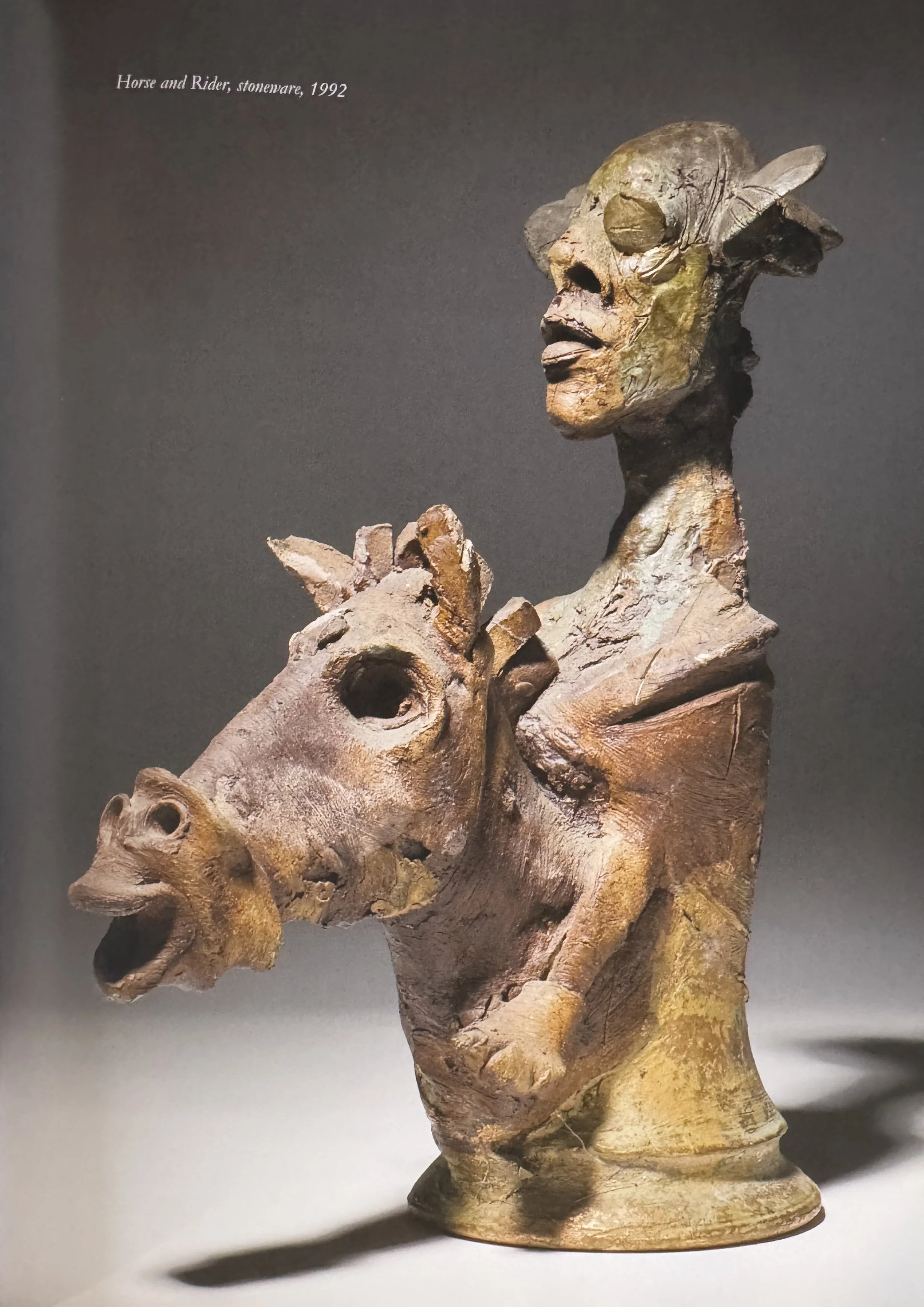
Inspired by the work of Alberto Giacometti, Pat manipulates thrown forms into figures of various shapes and sizes. ‘ I like to make my figures out of thrown sections and manipulate them into shape?’
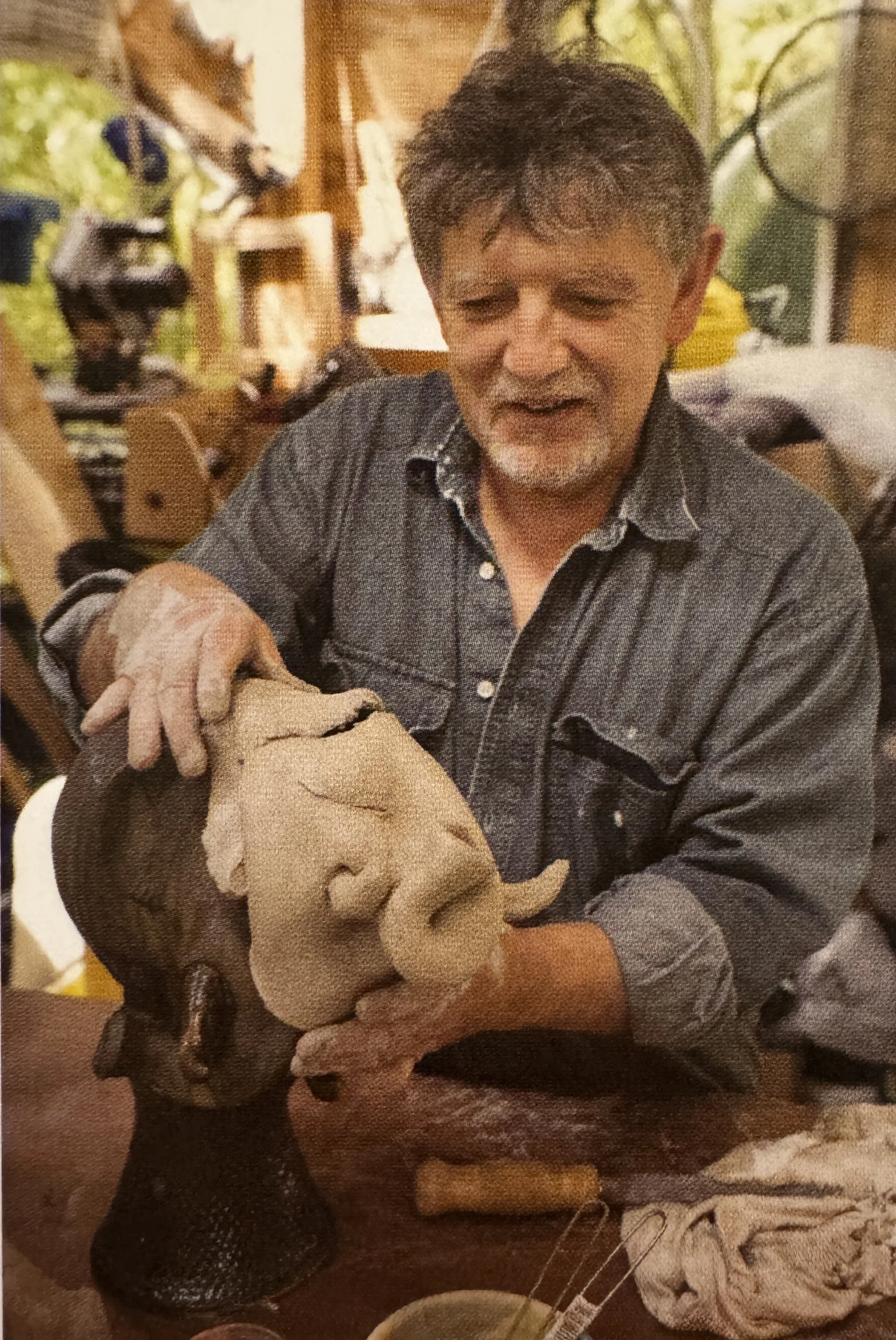
“Being a potter wasn't a business back then, it was a wonderful way of life.”
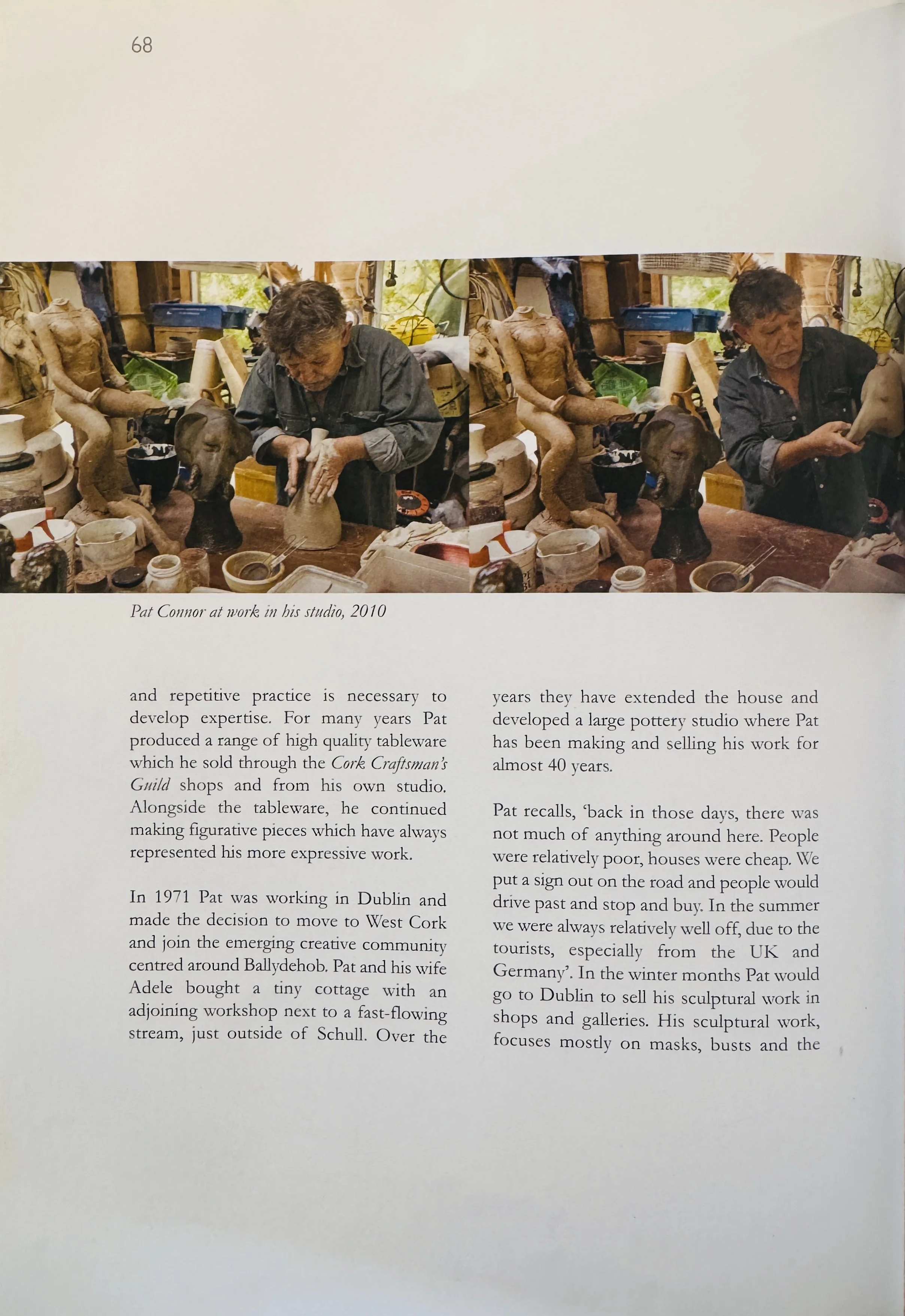
He is an exceptionally skilled ceramicist who learnt to throw after finishing college when he was apprenticed to a potter for several months. Throwing is the process of shaping clay as it spins on the potter's wheel and repetitive practice is necessary to develop expertise. For many years Pat produced a range of high quality tableware which he sold through the Cork Craftsman's Guild shops and from his own studio. Alongside the tableware, he continued making figurative pieces which have always represented his more expressive work.
In 1971 Pat was working in Dublin and made the decision to move to West Cork and join the emerging creative community centred around Ballydehob. Pat and his wife Adele bought a tiny cottage with an adjoining workshop next to a fast-flowing stream, just outside of Schull. Over the years they have extended the house and developed a large pottery studio where Pat has been making and selling his work for almost 40 years.
Pat recalls, ‘back in those days, there was not much of anything around here. People were relatively poor, houses were cheap. We put a sign out on the road and people would drive past and stop and buy. In the summer we were always relatively well off, due to the tourists, especially from the UK and Germany'. In the winter months Pat would go to Dublin to sell his sculptural work in shops and galleries. His sculptural work, focuses mostly on masks, busts
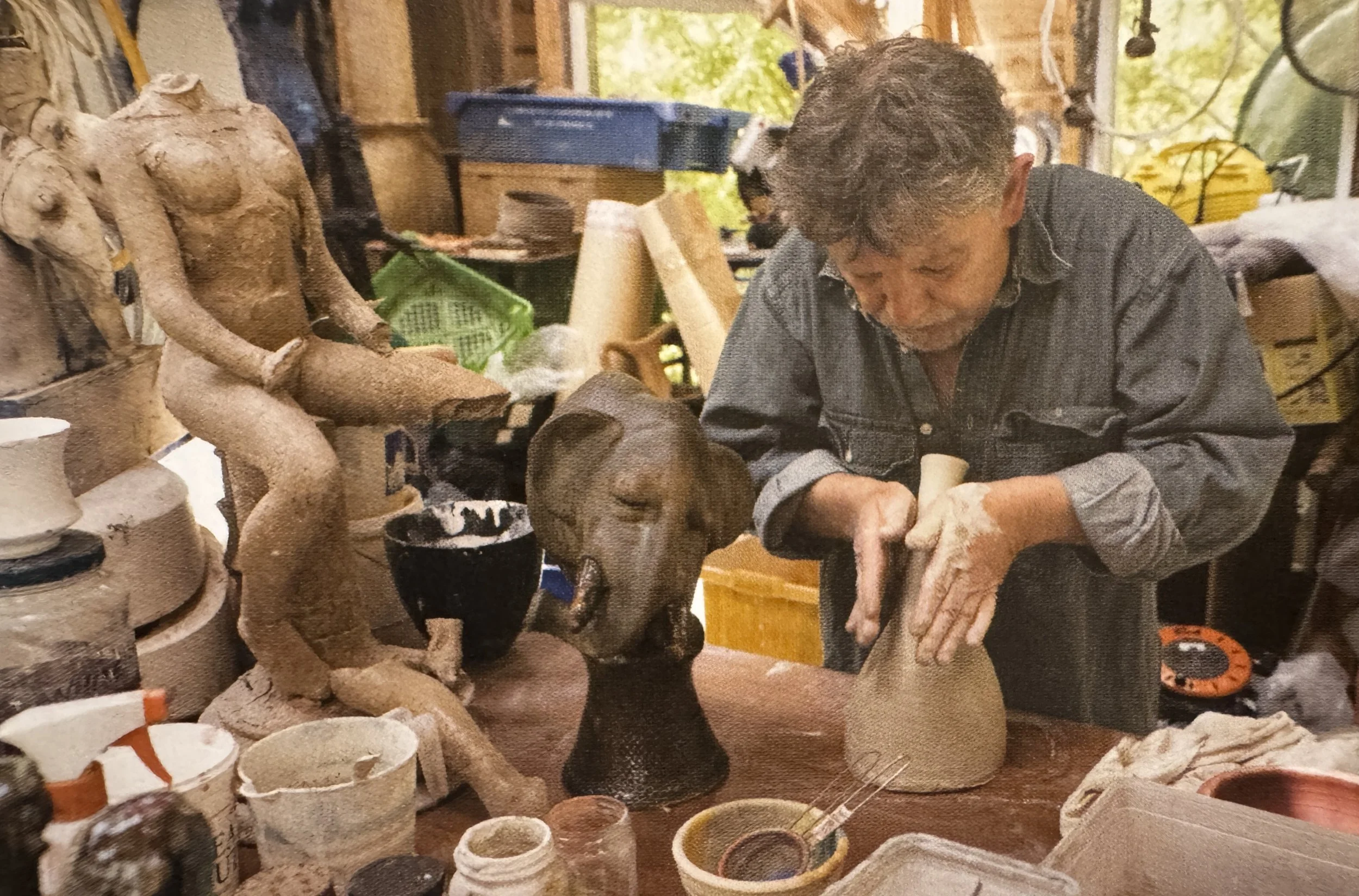
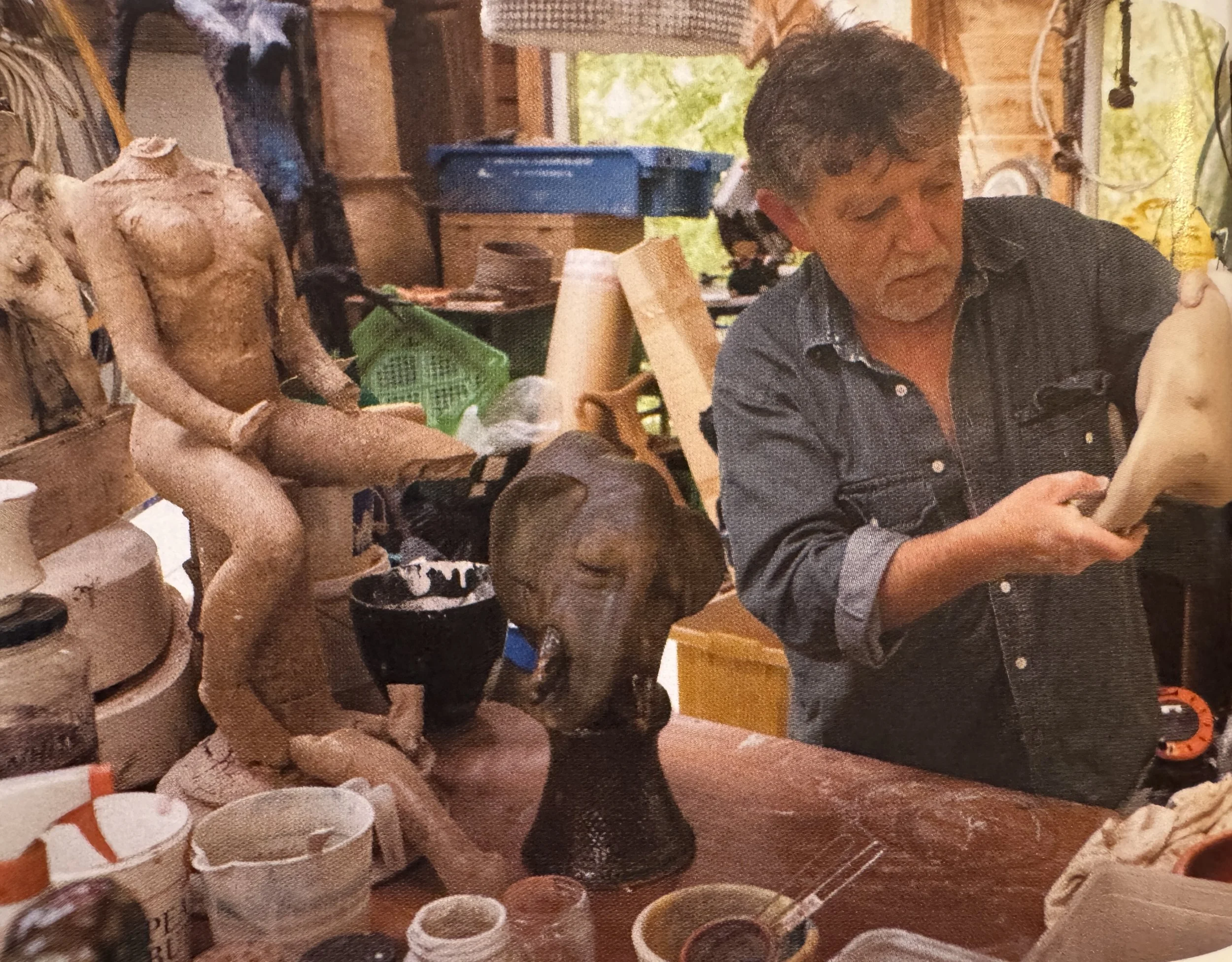
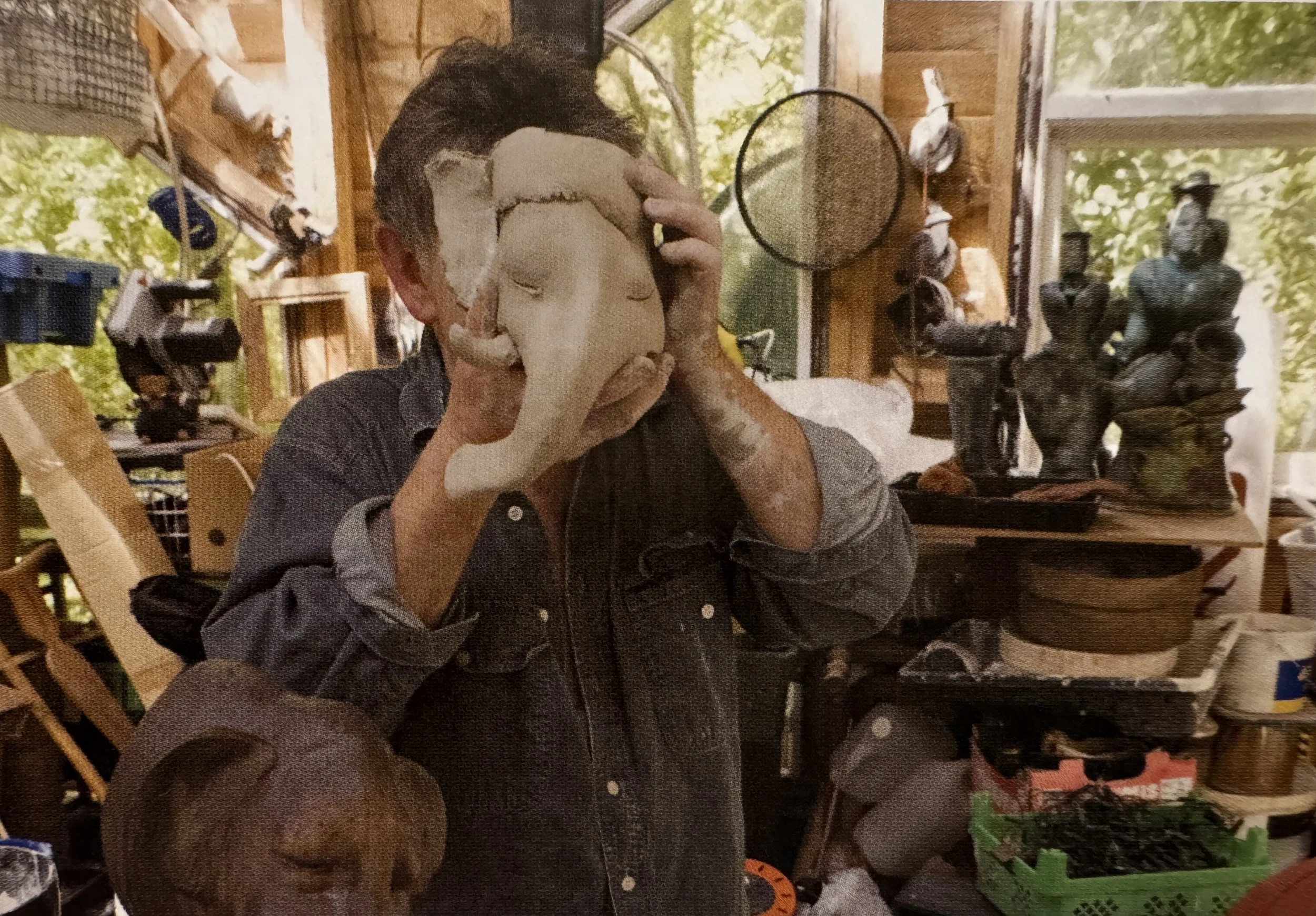
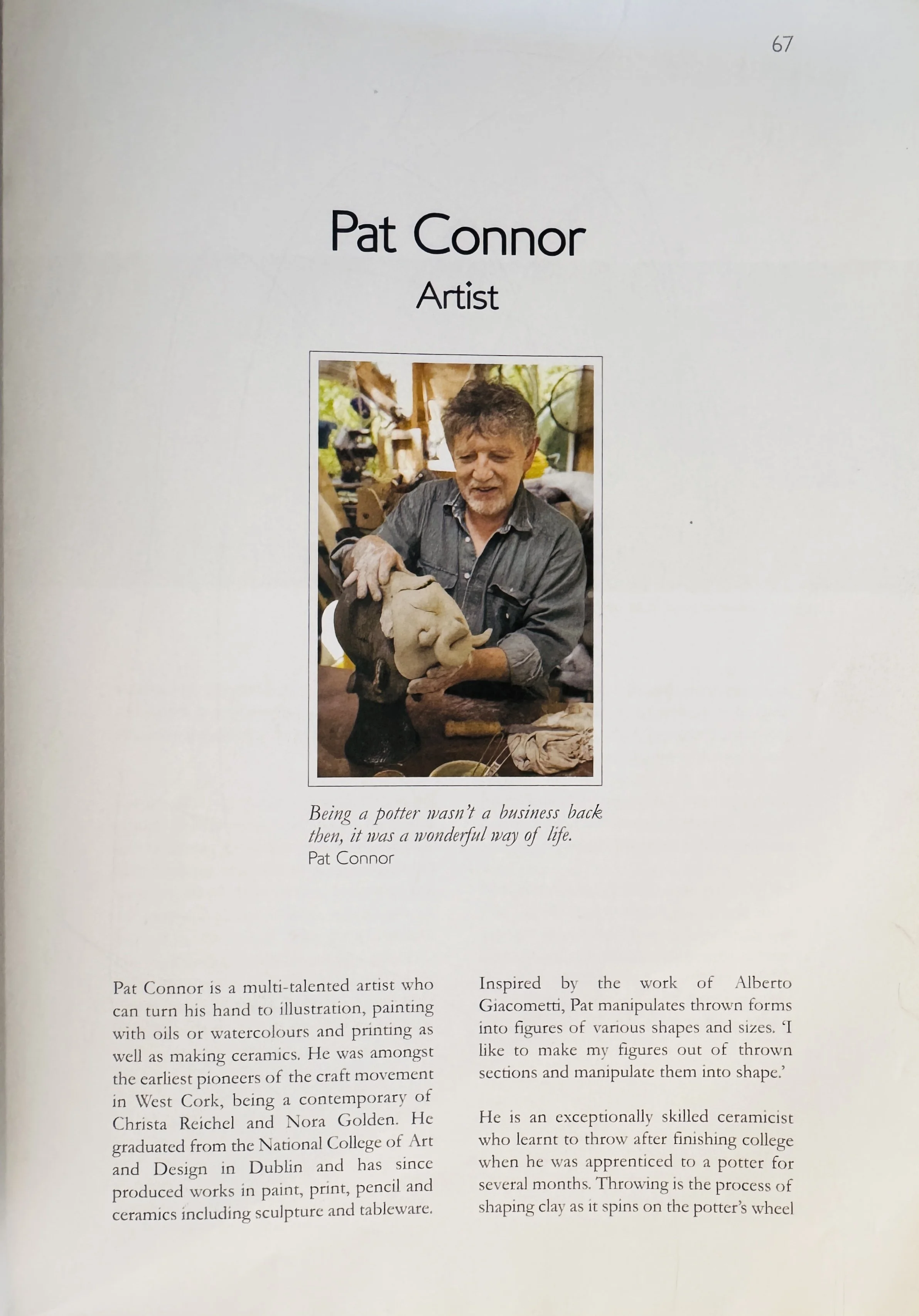
Pat Connor at work in his studio, 2010
Photograpy by Roland Paschhoff ©2010
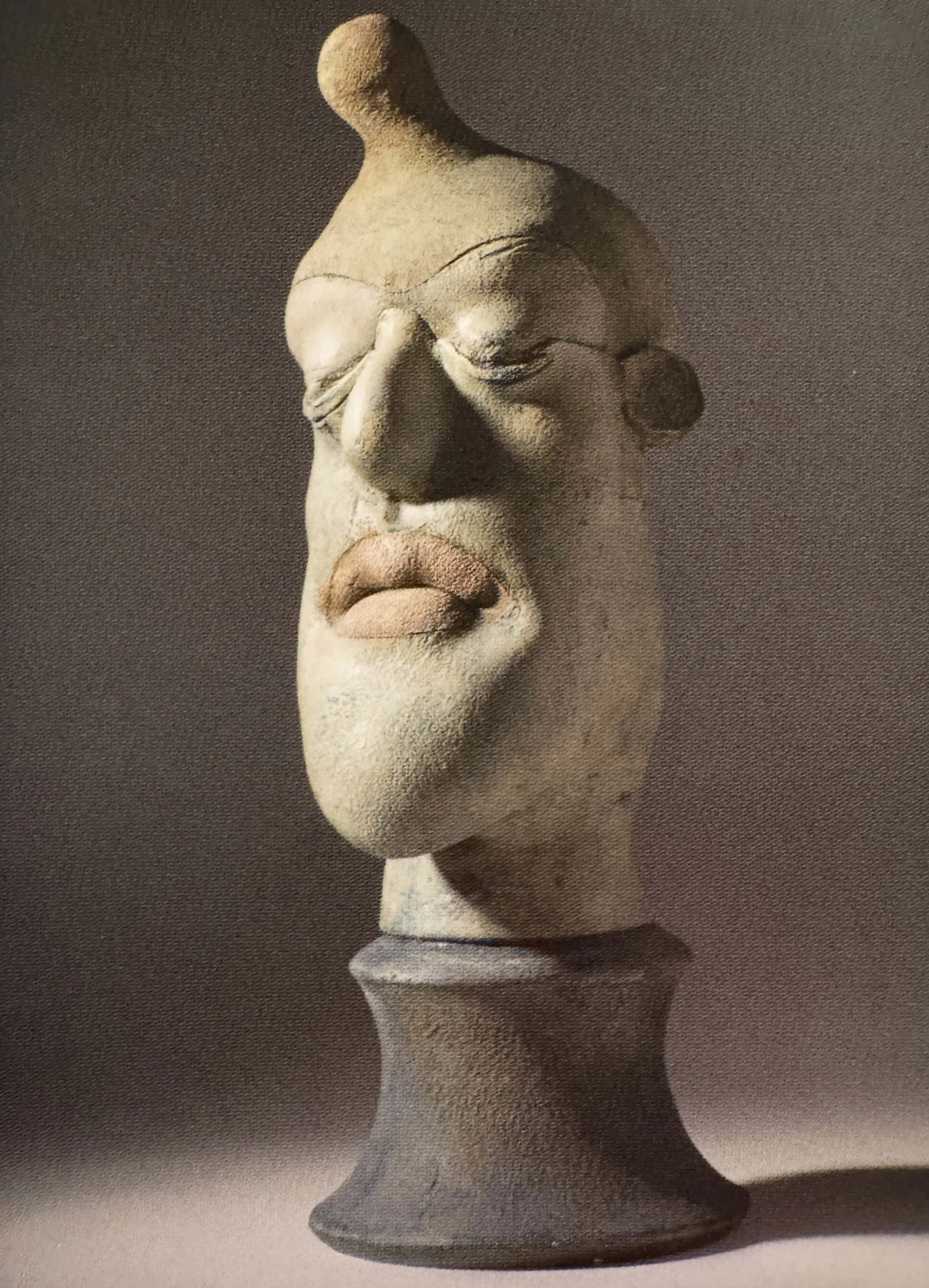
and the human head, each unique facial expression evocative of the human condition - fierce, peaceful, tormented and humorous.
As there were large numbers of people visiting West Cork, the exceptional work being produced in the area was recognised both nationally and internationally. Along with exhibitions in Cork and Dublin, high profile exhibitions were organised, taking the artists on two occasions to exhibit their work in Switzerland. During the 1980s a new facility opened in West Cork, The West Cork Arts Centre, which provided artists with a local venue in which to show and sell their work.
Pat was a founder member of the Cork Craftsman's Guild and sold his work through the shop in Cork for many years. He was also a member of the Society of Cork Potters and took part in the 1982 international Symposium as well as participating in workshops and events including annual exhibitions at the Crawford Art Gallery in Cork. He participated in the 1980 Paris Biennale and he has pieces in the National Museum collection as well as in private collections such as the Bank of Ireland and Allied Irish Bank.
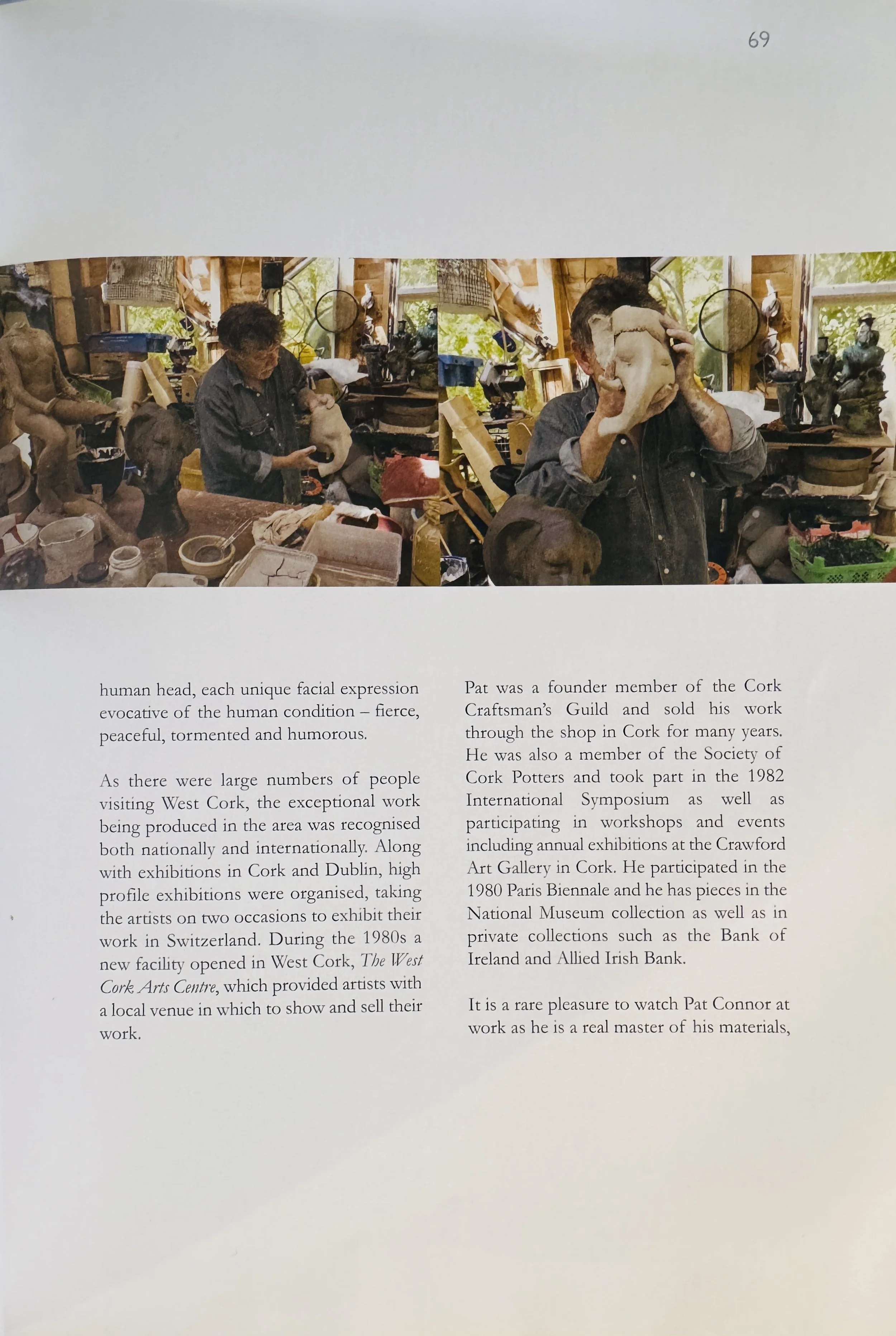
It is a rare pleasure to watch Pat Connor at work as he is a real master of his materials, his hands rapidly shaping and forming the clay into a living form, not necessarily one we might recognise but maybe a figure from his imagination.
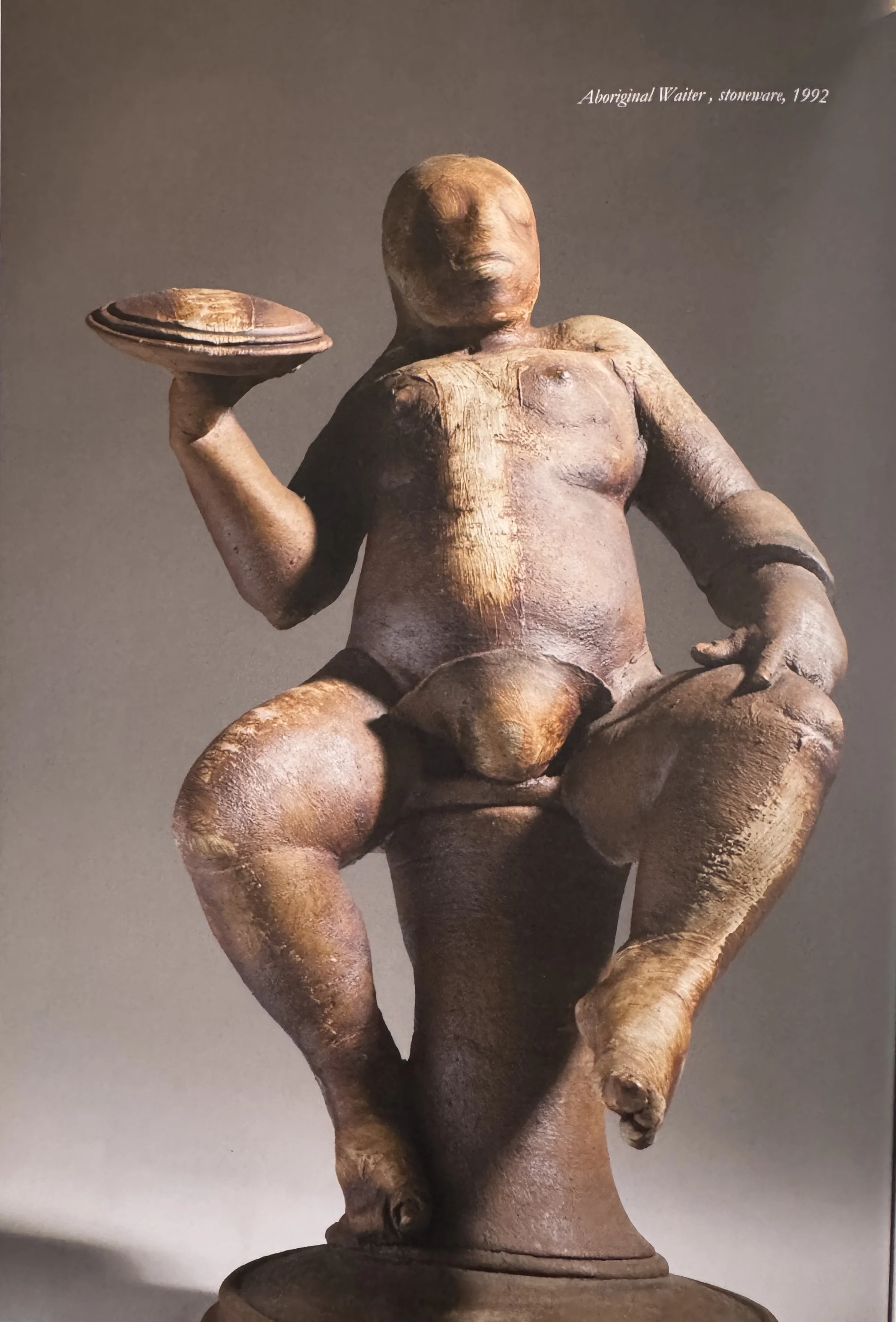
He talks of other things while his hands seem to act of their own accord and in a very short time, a figure emerges. Pat uses stoneware clay and simple glazes that contain copper and iron oxides, and sometimes coloured slips.
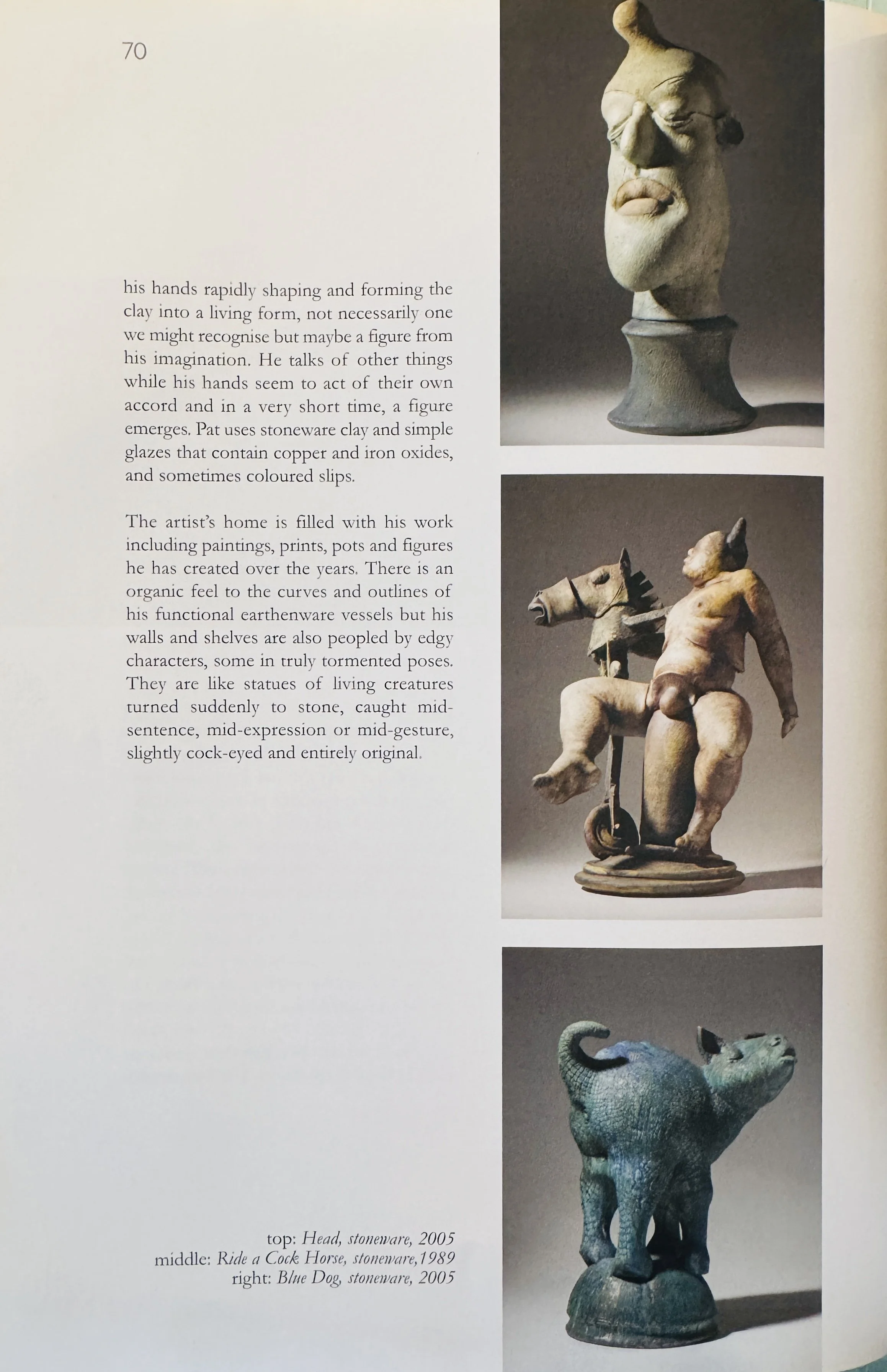
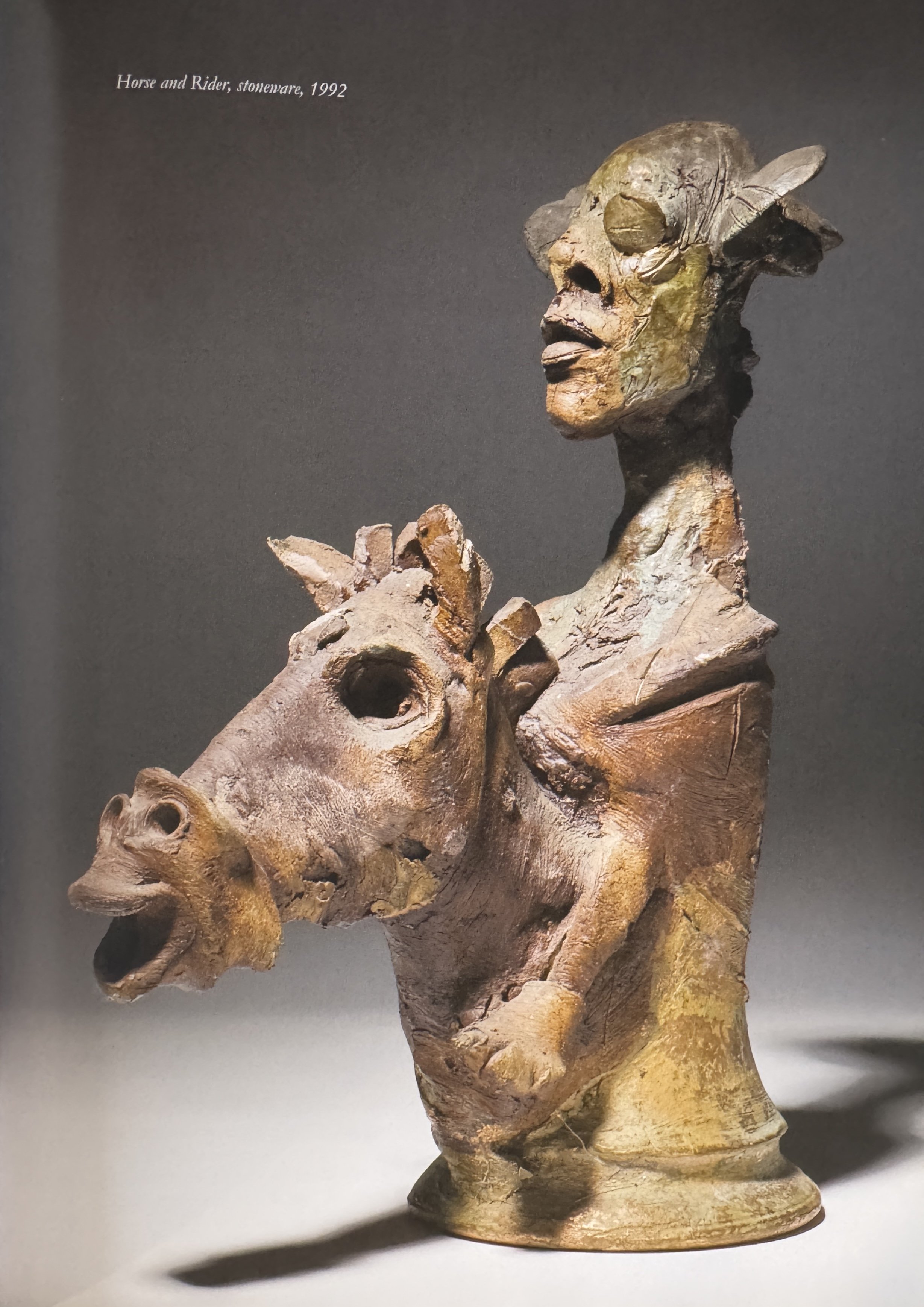
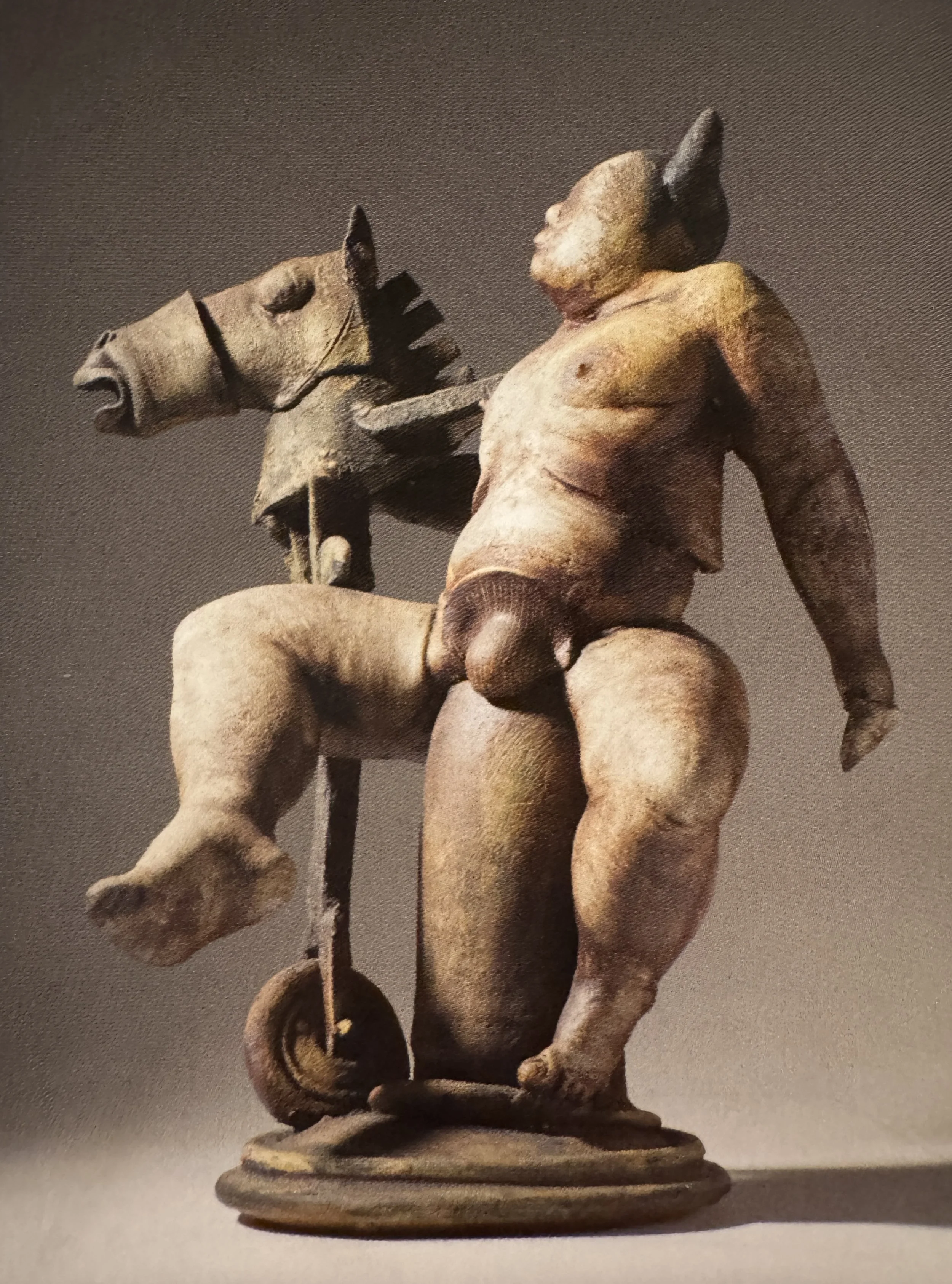
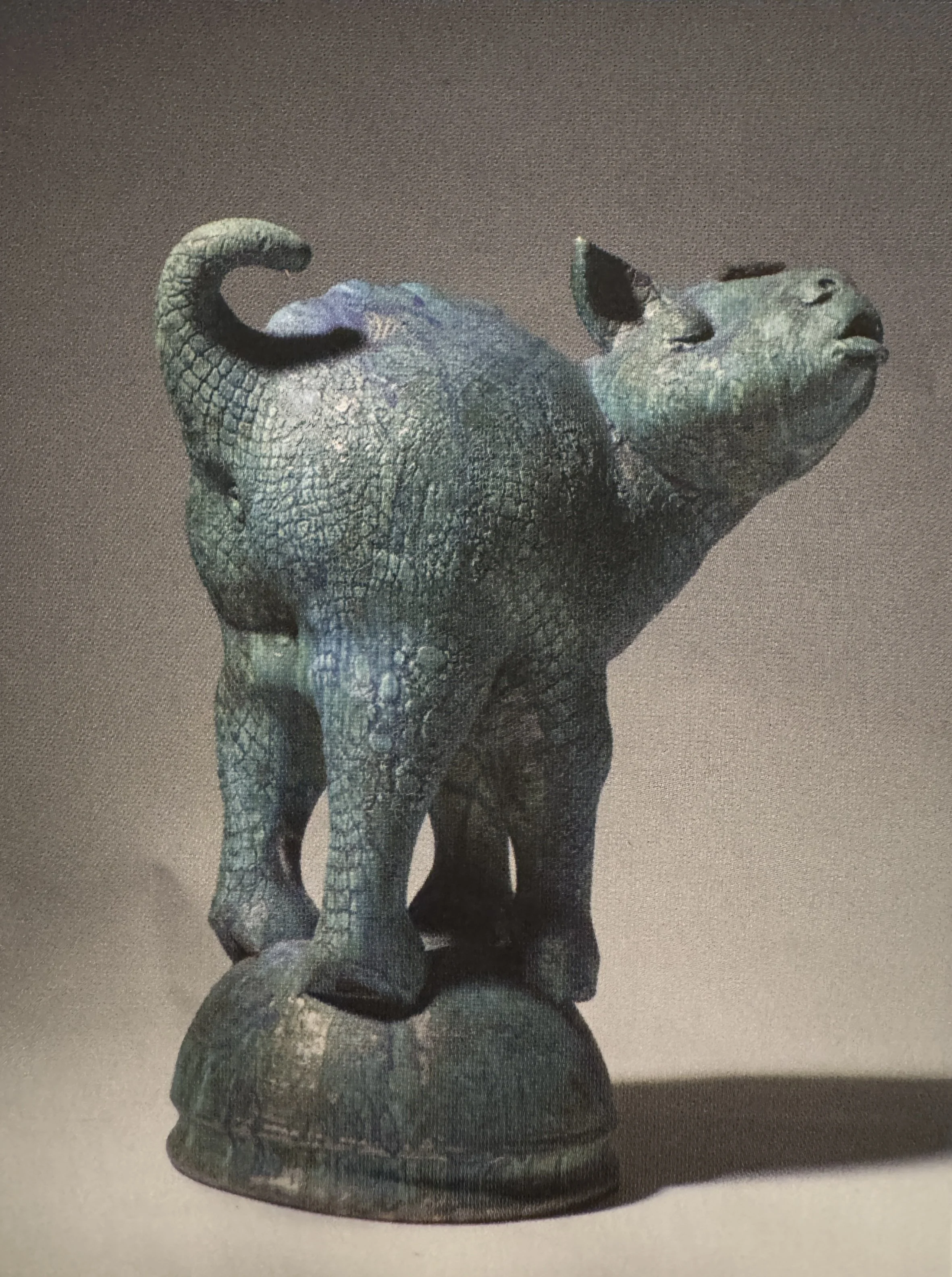
The artist's home is filled with his work including paintings, prints, pots and figures he has created over the years. There is an organic feel to the curves and outlines of his functional earthenware vessels but his walls and shelves are also peopled by edgy characters, some in truly tormented poses. They are like statues of living creatures turned suddenly to stone, caught mid-sentence, mid-expression or mid-gesture, slightly cock-eyed and entirely original.
top: Head, stoneware, 2005
middle: Ride a Cock Horse, stoneware, 1989
right: Blue Dog, stoneware, 2005
Photograpy by Roland Paschhoff ©2010