CERAMICS IRELAND 2012
ISSUE 29
ARTICLE BY MAIREAD MCANALLEN, P8-11
PAT CONNOR
MAIREAD MCANALLEN
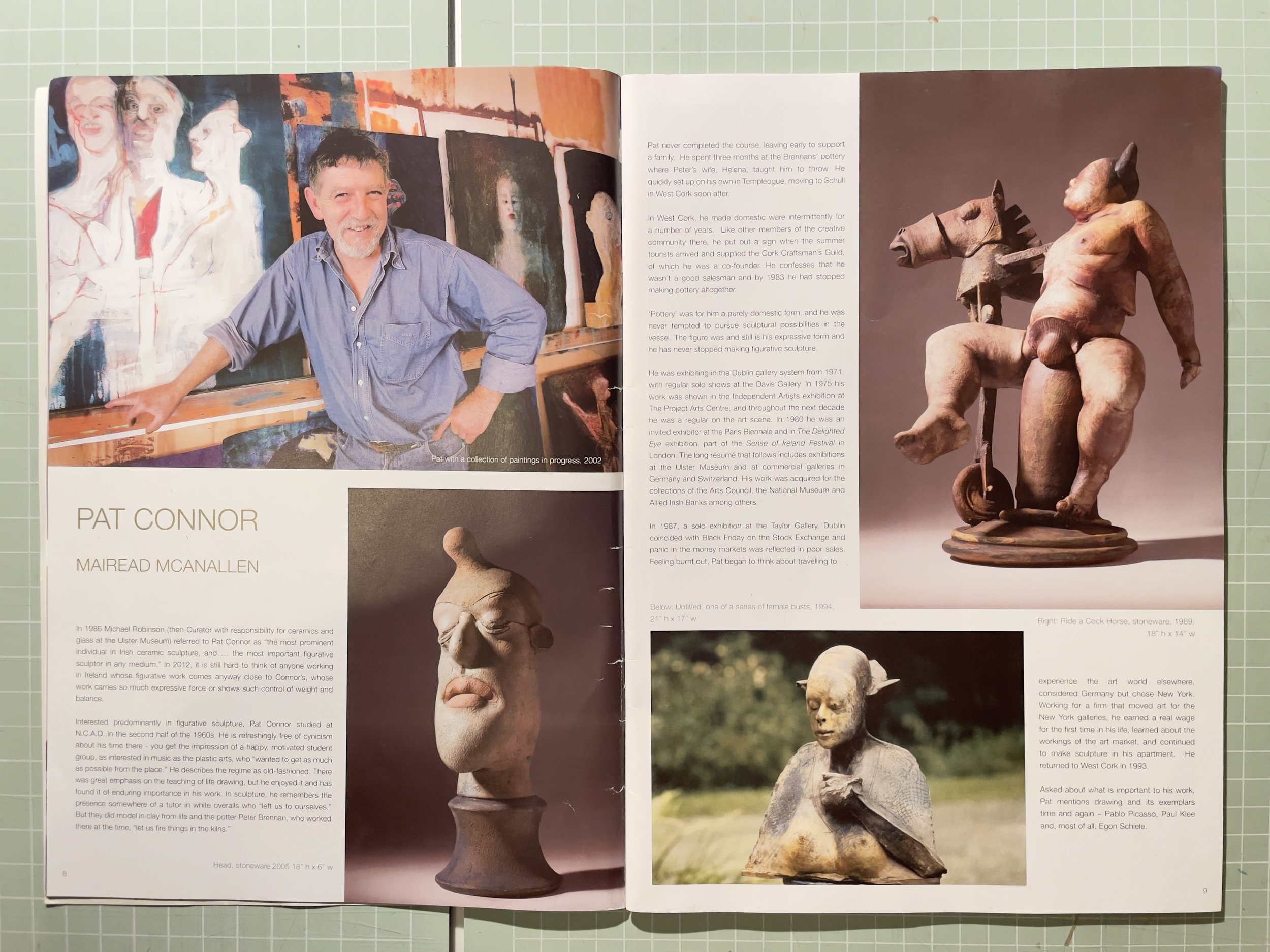
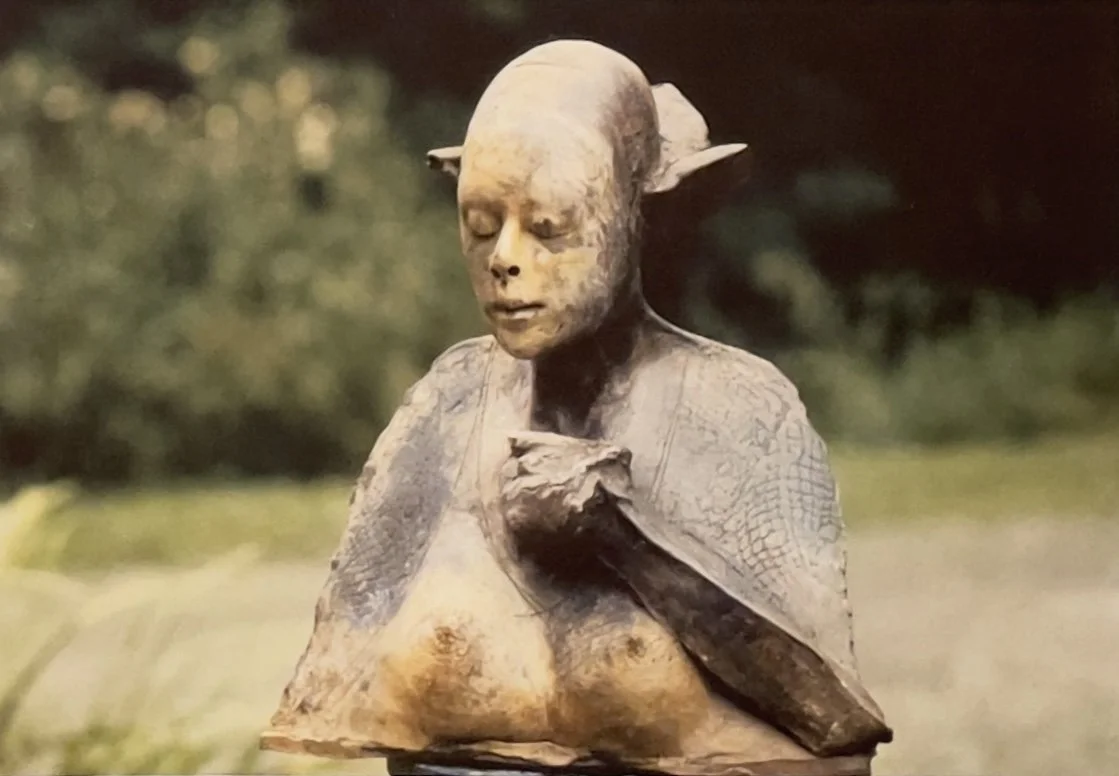
In 1986 Michael Robinson (then-Curator with responsibility for ceramics and glass at the Ulster Museum) referred to Pat Connor as "the most prominent individual in Irish ceramic sculpture, and ... the most important figurative sculptor in any medium." In 2012, it is still hard to think of anyone working in Ireland whose figurative work comes anyway close to Connor's, whose work carries so much expressive force or shows such control of weight and balance.
Interested predominantly in figurative sculpture, Pat Connor studied at N.C.A.D. in the second half of the 1960s. He is refreshingly free of cynicism about his time there - you get the impression of a happy, motivated student group, as interested in music as the plastic arts, who "wanted to get as much as possible from the place." He describes the regime as old-fashioned. There was great emphasis on the teaching of life drawing, but he enjoyed it and has found it of enduring importance in his work. In sculpture, he remembers the presence somewhere of a tutor in white overalls who "left us to ourselves." But they did model in clay from life and the potter Peter Brennan, who worked there at the time, "let us fire things in the kilns."
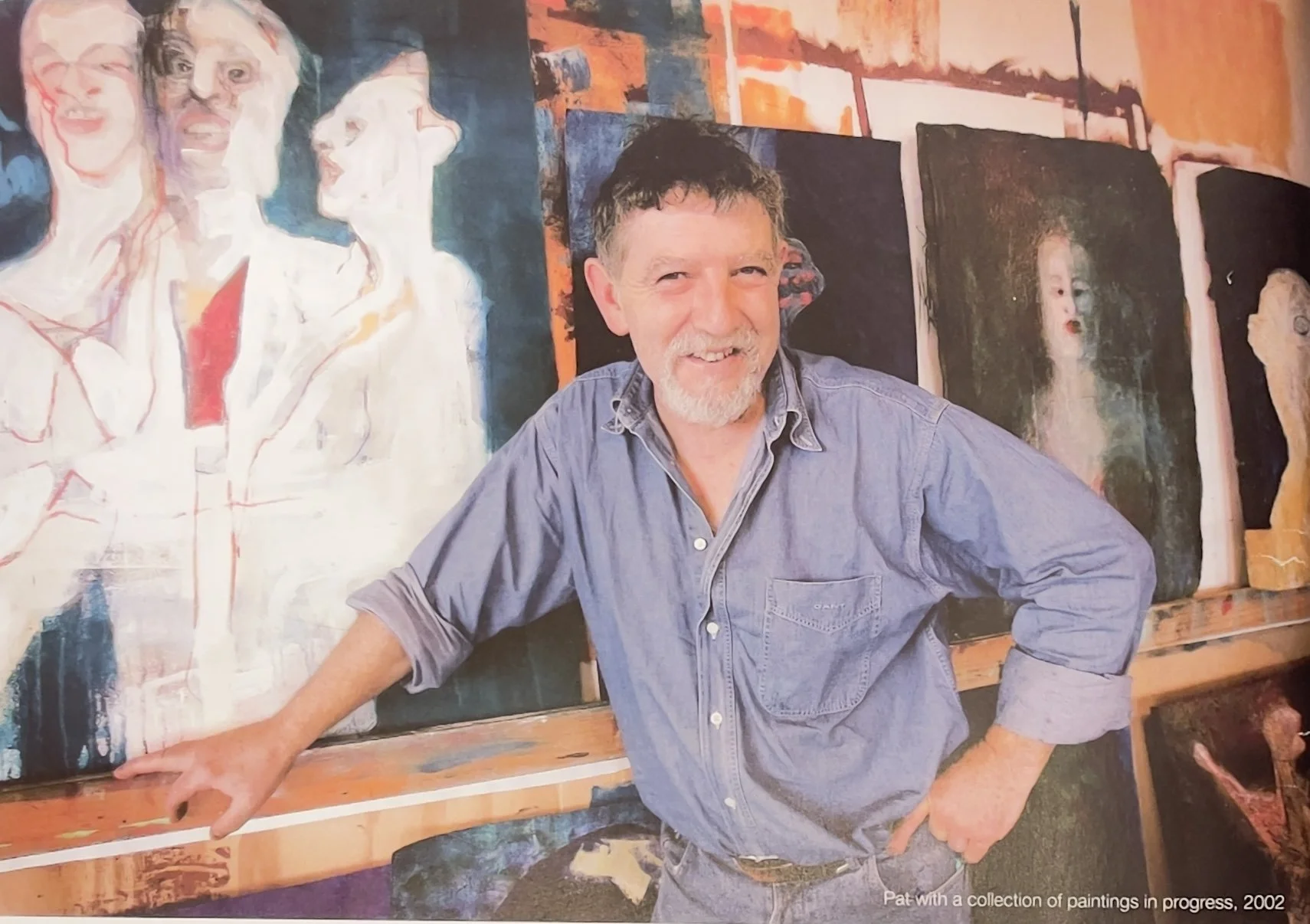
Pat never completed the course, leaving early to support a family. He spent three months at the Brennans pottery where Peter's wife, Helena, taught him to throw. He quickly set up on his own in Templeogue, moving to Schull in West Cork soon after.
In West Cork, he made domestic ware intermittently for a number of years. Like other members of the creative community there, he put out a sign when the summer tourists arrived and supplied the Cork Craftsman's Guild, of which he was a co-founder. He confesses that he wasn't a good salesman and by 1983 he had stopped making pottery altogether.
'Pottery' was for him a purely domestic form, and he was never tempted to pursue sculptural possibilities in the vessel. The figure was and still is his expressive form and he has never stopped making figurative sculpture.
He was exhibiting in the Dublin gallery system from 1971, with regular solo shows at the Davis Gallery. In 1975 his work was shown in the Independent Artists exhibition at The Project Arts Centre, and throughout the next decade he was a regular on the art scene. In 1980 he was an invited exhibitor at the Paris Biennale and in The Delighted Eye exhibition, part of the Sense of Ireland Festival in London. The long résumé that follows includes exhibitions at the Ulster Museum and at commercial galleries in Germany and Switzerland. His work was acquired for the collections of the Arts Council, the National Museum and Allied Inish Banks among others
In 1987, a solo exhibition at the Taylor Gallery, Dublin coincided with Black Friday on the Stock Exchange and panic in the money markets was reflected in poor sales.
Feeling burnt out, Pat began to think about travelling to experience the art world elsewhere. He considered Germany but chose New York.
Working for a firm that moved art for the New York galleries, he earned a real wage for the first time in his life, learned about the workings of the art market, and continued to make sculpture in his apartment.
"quality of the line, its texture and the form it makes ... the tension of what should be there but isn't"
He returned to West Cork in 1993
Asked about what is important to his work. Pat mentions drawing and its exemplars time and again - Pablo Picasso, Paul Klee and, most of all, Egon Schiele "quality of the line, its texture and the form it makes ... the tension of what should be there but isn't" are important, and he refers to "the quare note" in Irish music: the subtle change that brings the music to a new level, bringing the line off in a different and unexpected direction.
Drawing "makes you look more carefully", he says.
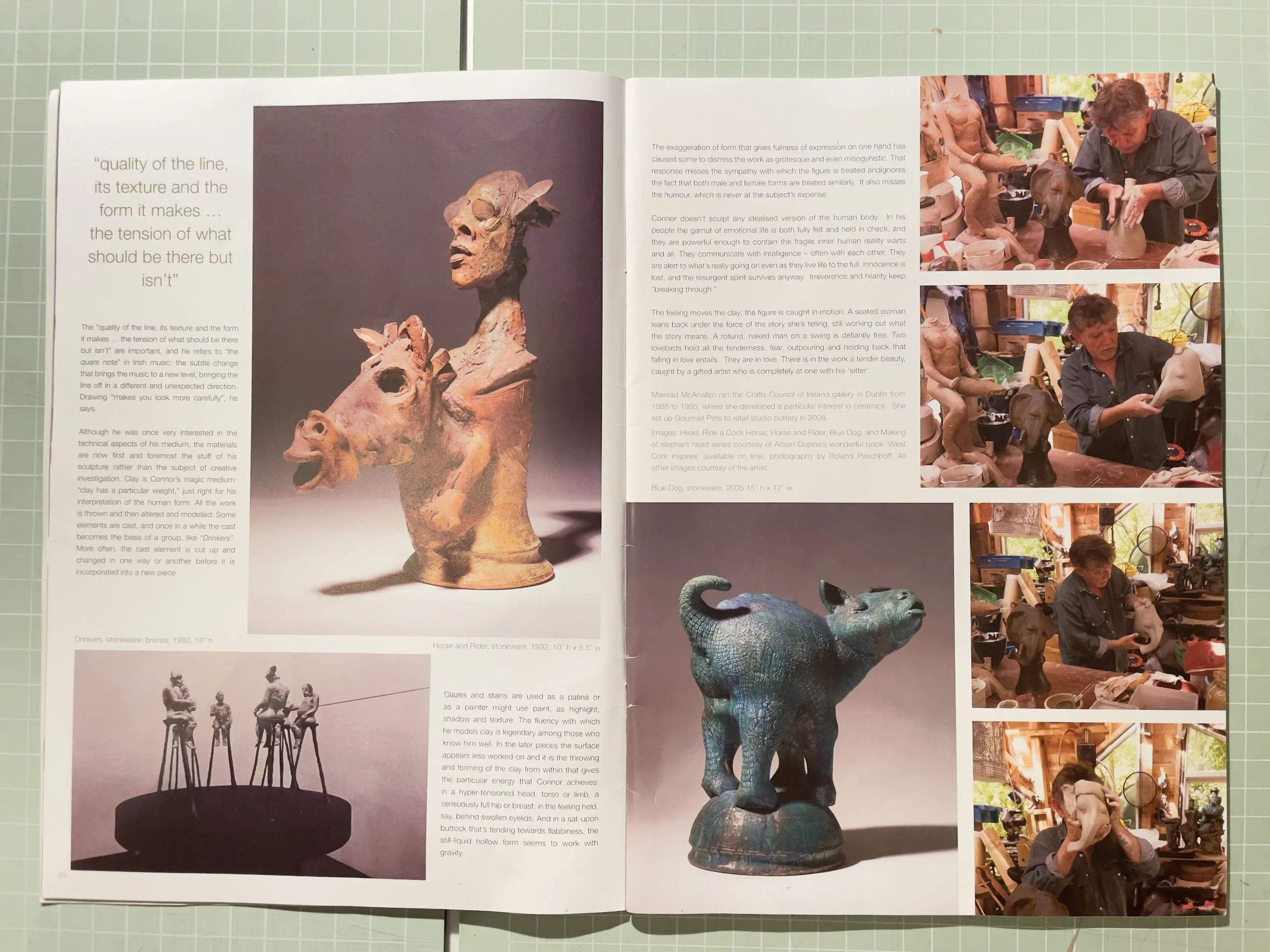
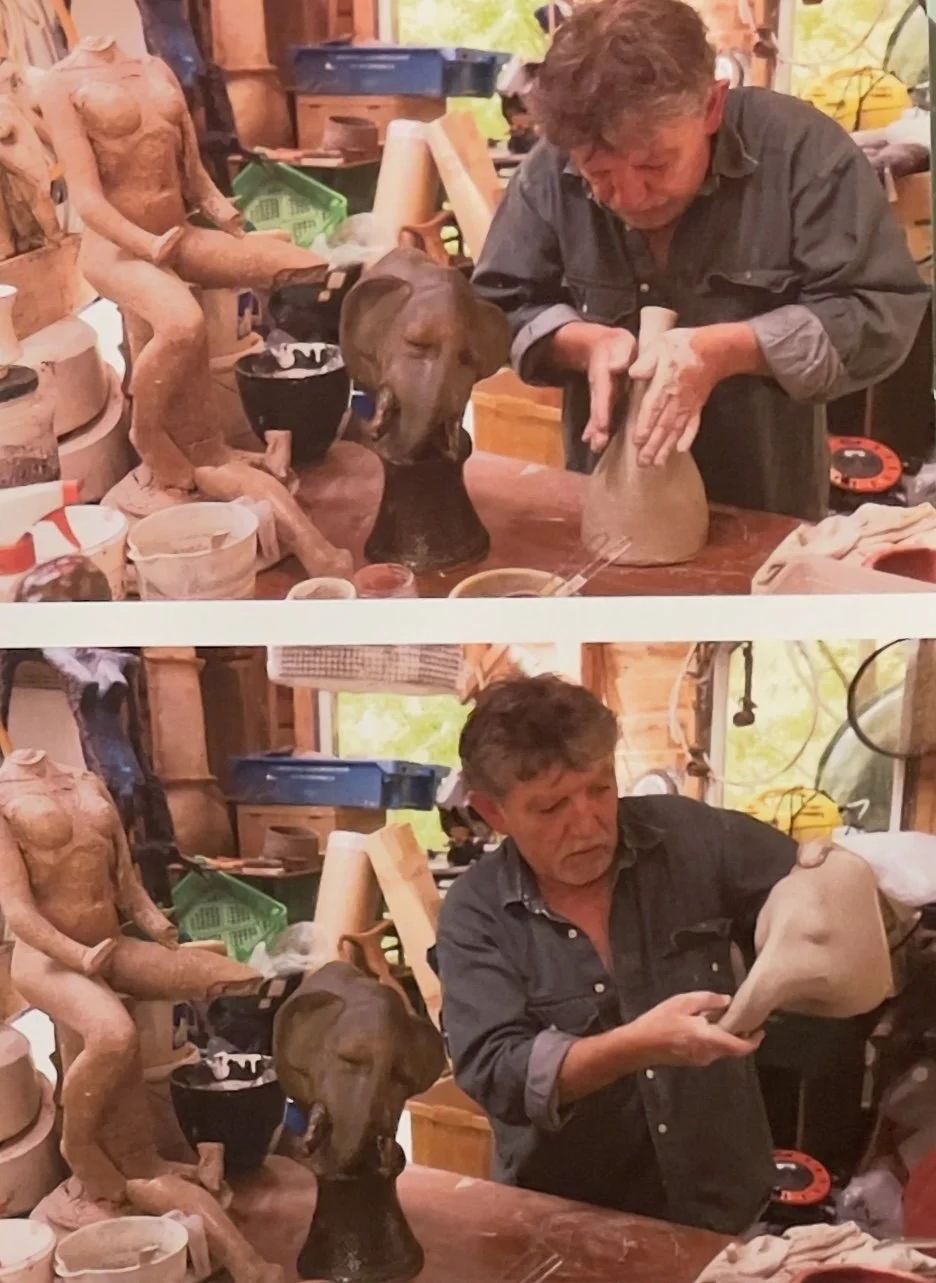
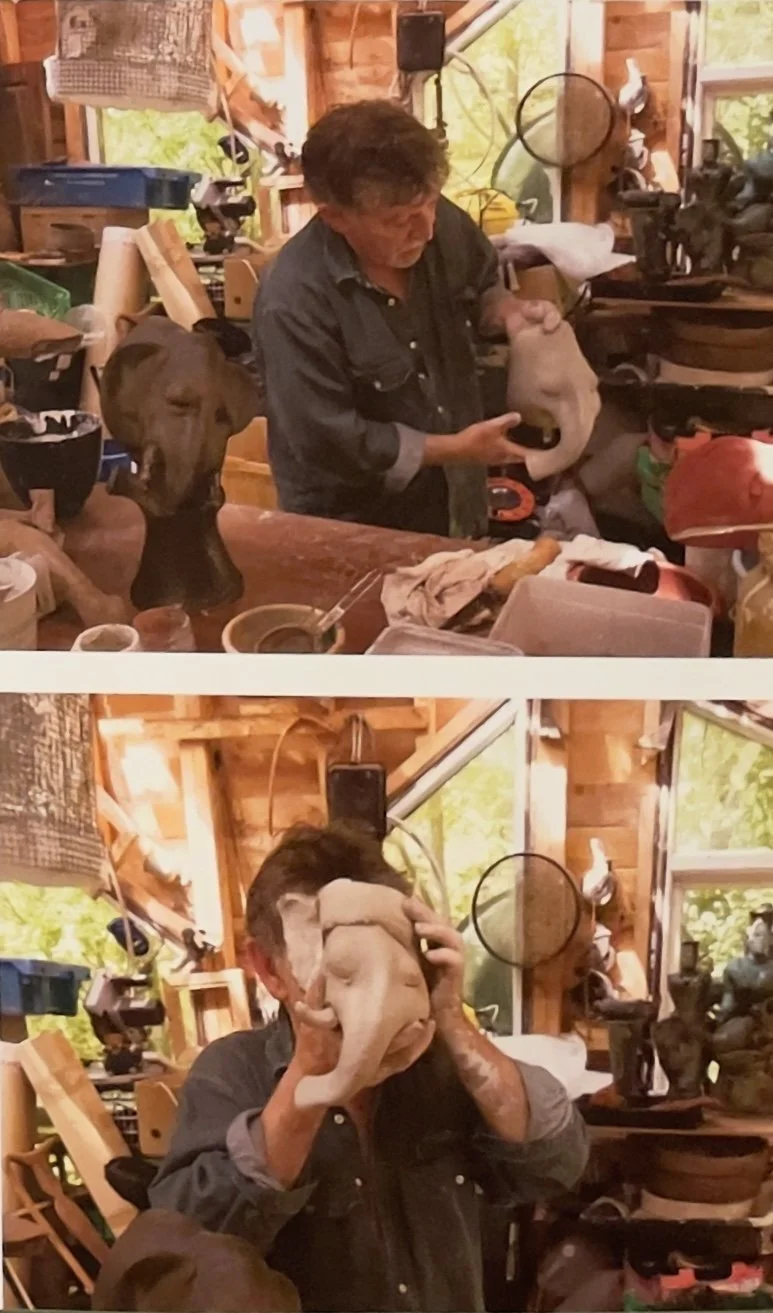
Although he was once very interested in the technical aspects of his medium, the materials are now first and foremost the stuff of his sculpture rather than the subject of creative investigation. Clay is Connor's magic medium: “clay has a particular weight," just right for his interpretation of the human form. All the work is thrown and then altered and modelled. Some elements are cast, and once in a while the cast becomes the basis of a group, like "Drinkers".
More often, the cast element is cut up and changed in one way or another before it is incorporated into a new piece.
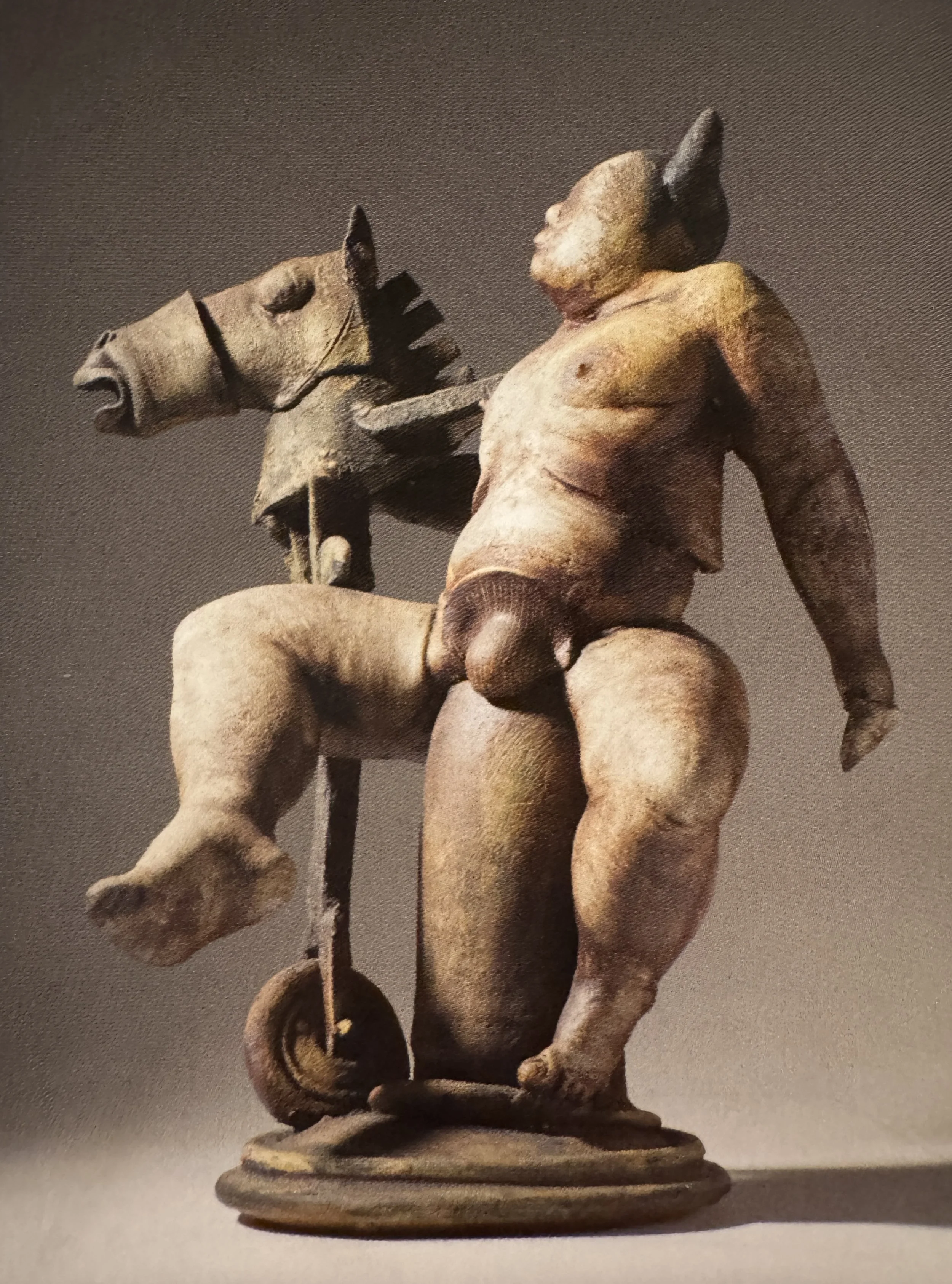
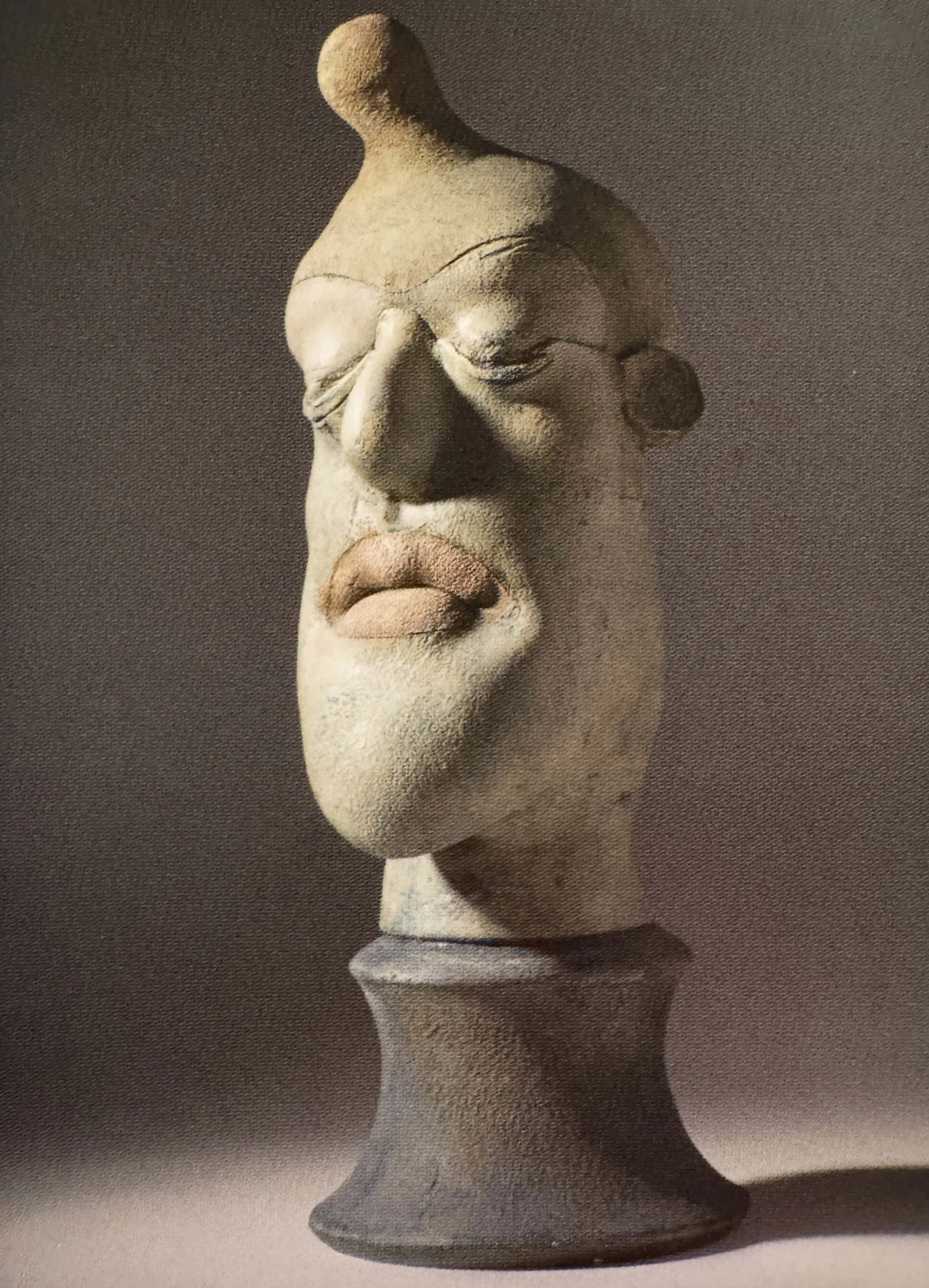
Glazes and stains are used as a patina or as a painter might use paint, as highlight, shadow and texture. The fluency with which he models clay is legendary among those who know him well. In the later pieces the surface appears less worked-on and it is the throwing and forming of the clay from within that gives the particular energy that Connor achieves: in a hyper-tensioned head, torso or limb, a sensuously full hip or breast; in the feeling held, say, behind swollen eyelids. And in a sat-upon buttock that's tending towards flabbiness, the still-liquid hollow form seems to work with gravity.
The exaggeration of form that gives fullness of expression on one hand has caused some to dismiss the work as grotesque and even misogynistic. That response misses the sympathy with which the figure is treated and ignores the fact that both male and female forms are treated similarly. It also misses the humour, which is never at the subject's expense.
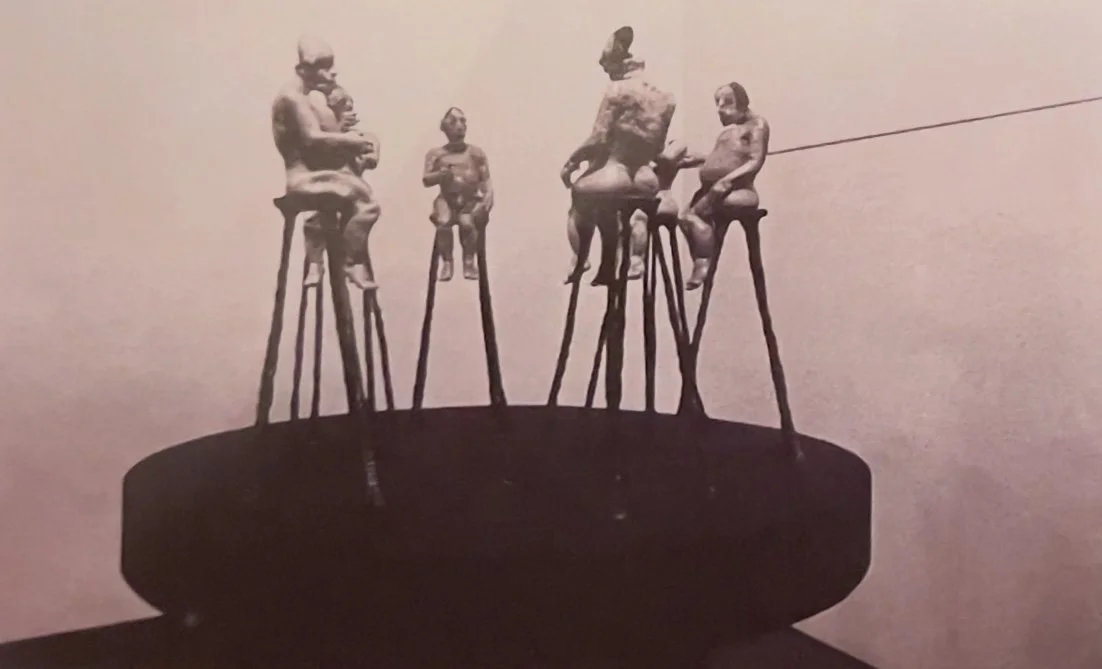
Connor doesn't sculpt any idealised version of the human body. In his people the gamut of emotional life is both fully felt and held in check, and they are powerful enough to contain the fragile inner human reality warts and all. They communicate with intelligence - often with each other. They are alert to what's really going on even as they live life to the full. Innocence is lost, and the resurgent spirit survives anyway. Irreverence and hilarity keep “ breaking through."
The feeling moves the clay; the figure is caught in motion. A seated woman leans back under the force of the story she's telling, still working out what the story means. A rotund, naked man on a swing is defiantly free. Two lovebirds hold all the tenderness, fear, outpouring and holding back that falling in love entails. They are in love. There is in the work a tender beauty, caught by a gifted artist who is completely at one with his 'sitter'.
Mairead McAnallen ran the Crafts Council of Ireland gallery in Dublin from 1988 to 1995, where she developed a particular interest in ceramics. She set up Gourmet Pots to retail studio pottery in 2008.
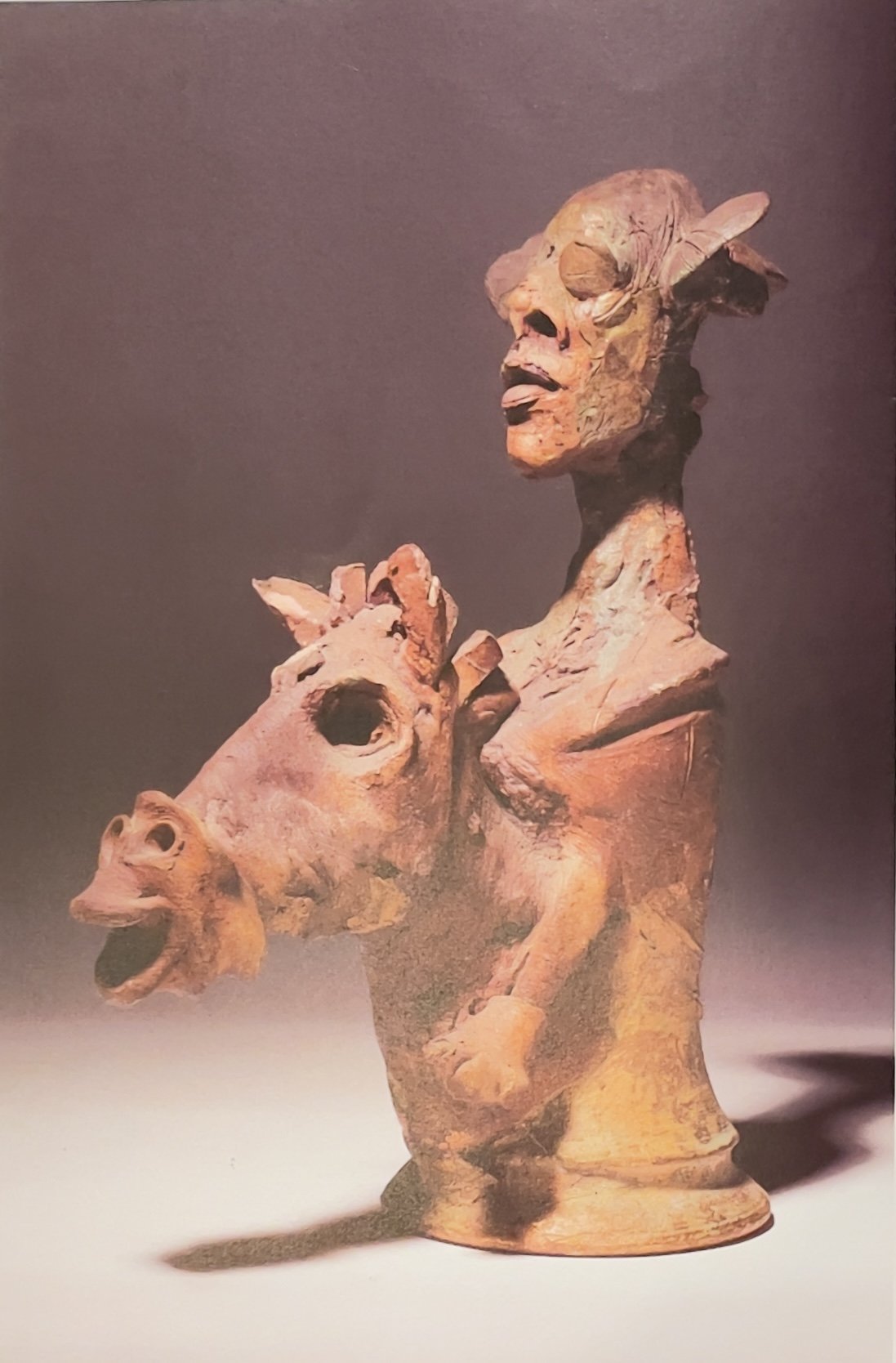
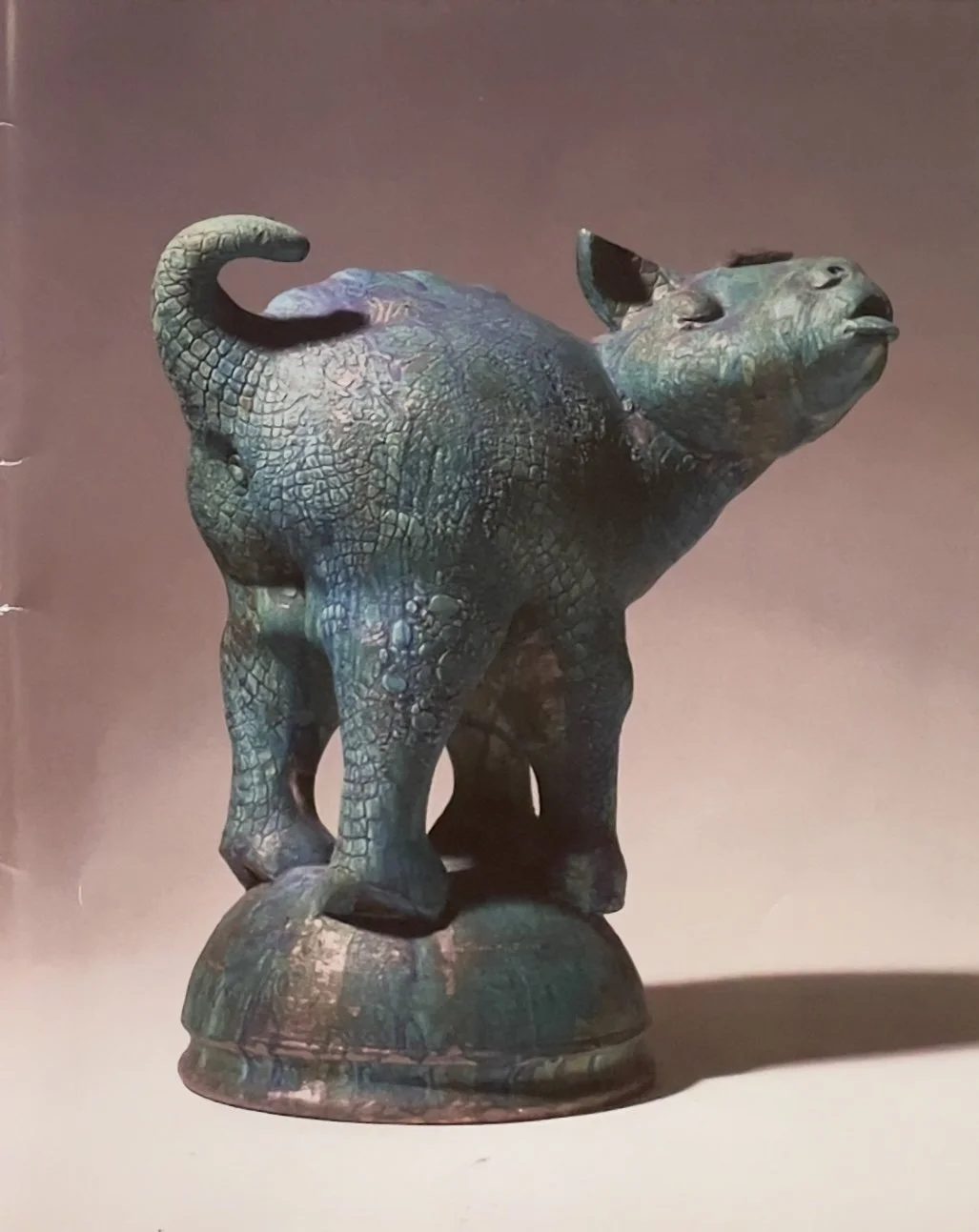
Images: Head, Ride a Cock Horse, Horse and Rider, Blue Dog, and Making of elephant head series courtesy of Alison Ospina's wonderful book 'West Cork Inspires' (available on line), photography by Roland Paschhoff.
All other images courtesy of the artist.